Writing an AI diligence statement
Create transparent, specific disclosures of AI use in your work
Create transparent, specific disclosures of AI use in your work.
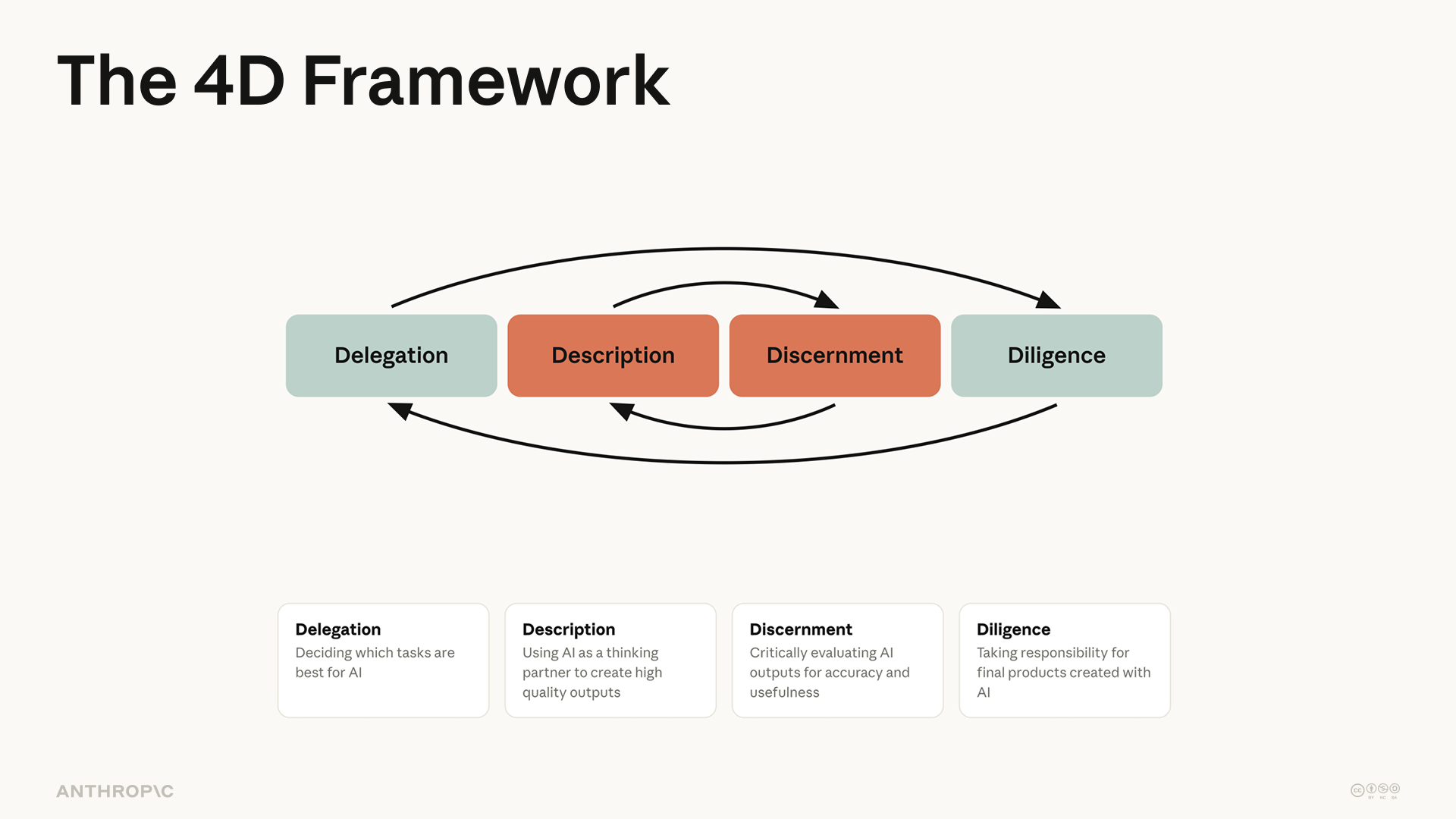
An AI diligence statement is a transparent acknowledgment of AI's role in your work, paired with your commitment to taking responsibility for the final output. Think of it as the "methods section" for your AI collaboration: it explains what AI did, what you did, and how you verified the result. Learn more about Diligence and the 4D framework for AI Fluency here.
Here’s an example for this tutorial:
In creating this tutorial, I collaborated with Claude to assist with synthesis, voice, tone, and format. I affirm that all AI-generated and co-created content underwent thorough review and evaluation. The final output accurately reflects my understanding, expertise, and intended meaning. While AI assistance was instrumental in the process, I maintain full responsibility for the content, its accuracy, and its presentation. This disclosure is made in the spirit of transparency and to acknowledge the role of AI in the creation process.
AI use in professional work is becoming common, but norms around disclosure are still forming. In many fields, especially regulated industries like life sciences, finance, and education, transparency about AI involvement is increasingly expected or required.
A good AI diligence statement does several things at once. It builds trust with your audience by showing you are thoughtful about how you use AI. It demonstrates professional judgment by documenting your verification process. It protects you by creating a clear record of your role in the final output. And it contributes to organizational learning by making AI use visible so teams can develop shared standards. For organizations to become fluent with AI, transparency is key. If it feels scary to disclose AI use, it’s unlikely the environment will be conducive to transformation. You can learn more about the importance of diligence in this video from our AI Fluency & Foundations course.
Strong AI diligence statements share a few characteristics. They are specific about what AI was used for, they describe the human review process, and they make clear who is accountable for the final product.
You can use any AI tool to help you draft an AI diligence statement for a project where AI played a role. The process takes about 10 minutes and works best when you bring specifics about your project and your review process.
Start by telling AI about your project and how you used AI in it. Be specific about the tasks. The more detail you provide here, the more precise and useful the resulting AI diligence statement will be.
Example prompt:
I need to write an AI diligence statement for a competitive landscape analysis I just completed. Here's how I used AI in the process: I used Claude to synthesize publicly available information about five competitor companies in the oncology therapeutics space. Specifically, I asked Claude to summarize each company's pipeline status, recent clinical trial results, and strategic partnerships based on information I provided from SEC filings, press releases, and published trial data. I then reviewed each summary against the original source documents, corrected two instances where Claude mischaracterized the phase of a clinical trial, added our internal team's strategic interpretation that Claude wouldn't have access to, and restructured the competitive positioning section based on conversations with our BD team. Please draft an AI diligence statement I can include at the end of this report. Keep it concise but specific.
The AI tool you’ve selected will produce a first draft. Review it to make sure it accurately describes your process. Common things to refine include adjusting the scope (did it capture all the tasks you described, or miss some?), adding specific details about your verification steps, and making sure the statement reflects your field's norms and expectations.
Example follow-up prompt:
This is close, but I want to add that our VP of Clinical Development also reviewed the trial data summaries before I finalized the report. And can you make the language about my corrections more specific? I want to note that the corrections were about trial phase classifications, not about the underlying data.
Different audiences need different levels of detail. An AI diligence statement in an internal strategy document might be brief, while one accompanying a regulatory submission should be thorough. Ask AI to adjust.
Example prompt:
Can you create two versions of this AI diligence statement? One for the full internal report (2-3 paragraphs with specific details about the review process) and one shorter version for the executive summary slide deck (2-3 sentences that capture the essentials).
This is an important step that's easy to skip. Read the AI diligence statement carefully and make sure it accurately represents what happened. If the statement says you "verified all citations," make sure that's true. If it says you "cross-referenced with primary sources," confirm that's what you actually did. Your AI diligence statement is itself a claim about your process, and it needs to be accurate.
Diligence statements only work if people feel safe writing them. If disclosing AI use feels risky, whether because of unclear policies, judgment from colleagues, or fear that it diminishes the perceived value of their work, people will either stop using AI or stop being honest about it. Both outcomes are worse than transparent use.
Leaders set the tone here. When a manager includes a diligence statement on their own deliverables, it signals that disclosure is a professional norm, not an admission of weakness. When a team lead shares how AI helped them draft a strategy document and what they changed during review, it gives others a concrete model to follow. Transparency is contagious, but it has to start somewhere visible.
A few practical steps for organizations:
Writing AI diligence statements and taking full responsibility for AI’s outputs is a key component of AI Fluency. Normalizing this practice will help ensure we all build intentional relationships with AI use in a variety of settings.
This tutorial is part of the AI Fluency effort at Anthropic. It was designed to help professionals develop practical, responsible approaches to AI collaboration. Learn more at Anthropic Academy.