Introducing Claude Meetings
Add Claude to your video call and get the work started while you talk
Claude can now join your video calls as a visible participant, following the conversation and starting on work during the meeting. Claude Meetings is now in beta.
Your team can ask Claude questions during the meeting, out loud or in chat. By default, Claude answers in writing, and it can use your connected tools with your permission.
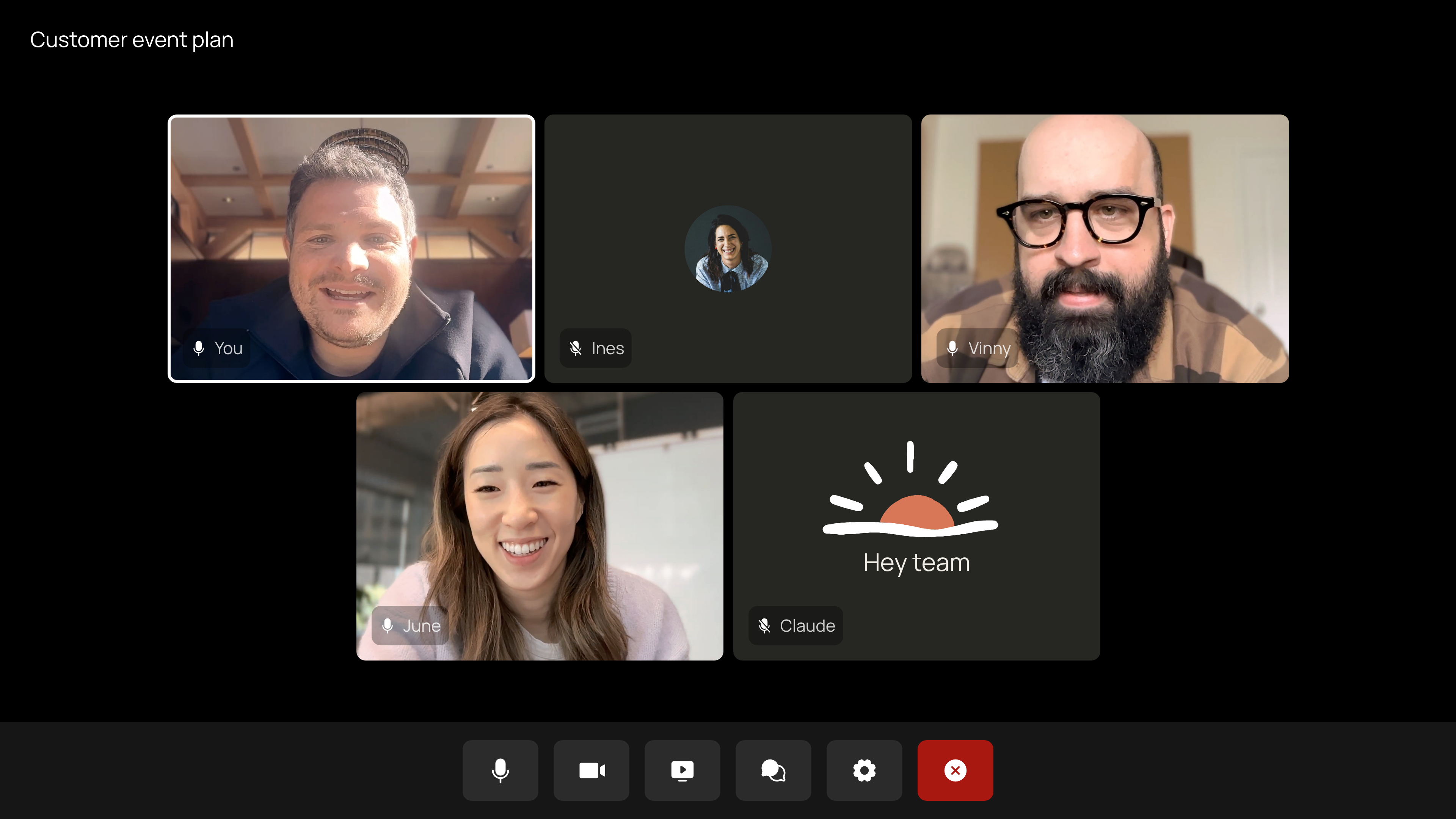
Claude also works with you live to build docs, whiteboards (opens in new tab), or other artifacts, while teammates on the invite refine them. Claude writes the notes and action items, so no one on the call has to.
Claude Meetings is starting to roll out in beta on Team and Enterprise plans. Support for other video conferencing platforms is coming soon.
What it looks like
Say your team is planning a customer event, and Claude is on the call. You say, “Claude, start a doc for this plan.” Claude writes up what the team has said so far, and teammates on the invite can edit the plan while you keep talking.
When you start discussing the budget, someone asks Claude what last year’s event cost. Claude asks for their approval to look it up, posts it in the meeting chat, and compares it to the current plan. When you start discussing timelines, someone asks Claude to put it on a whiteboard, and the team works on the schedule alongside the doc.
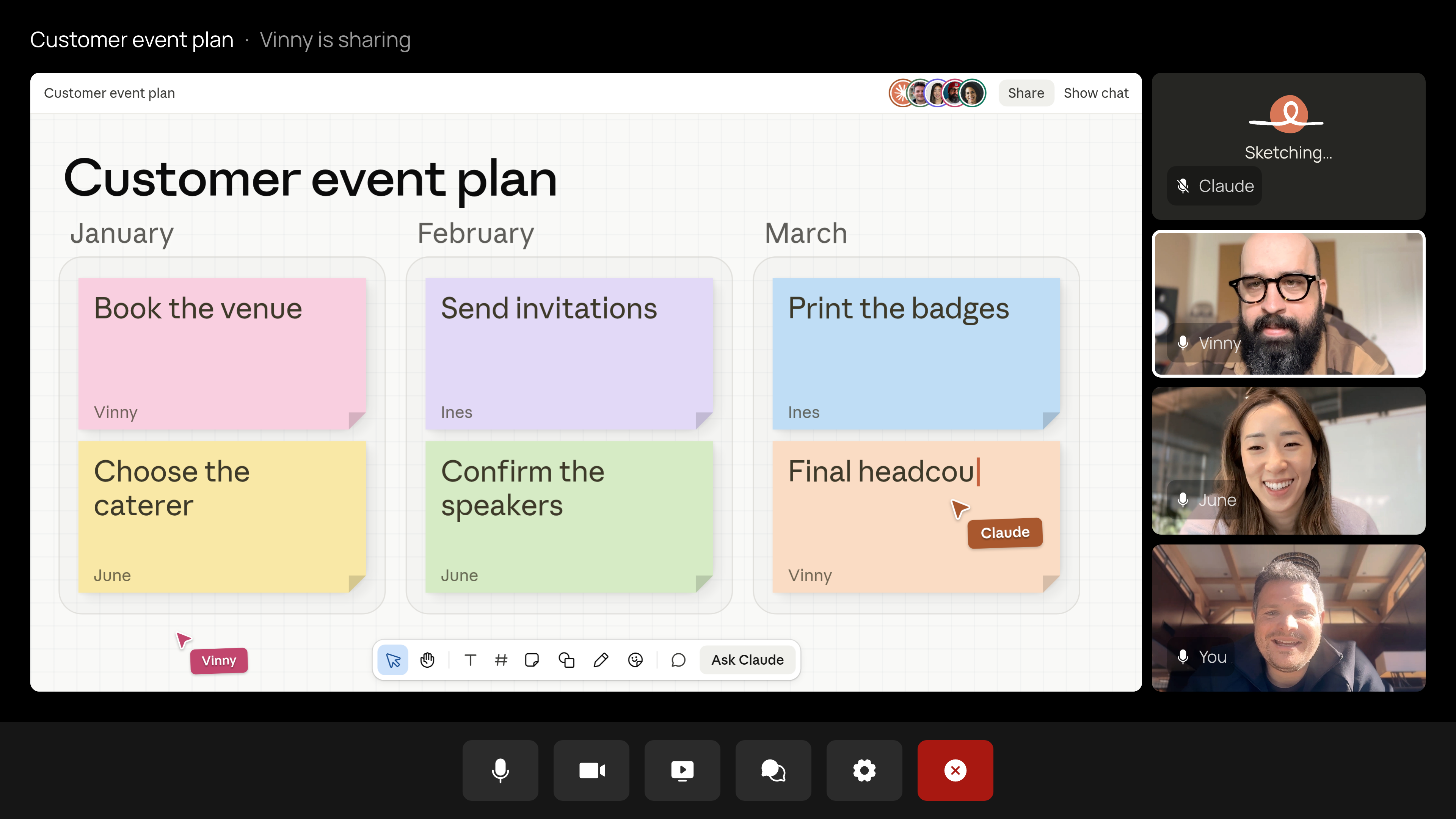
Before the meeting ends, someone asks Claude to share a recap with the team. After the call, any notes, action items, plan, and whiteboard are on the meeting’s page in claude.ai (opens in new tab).
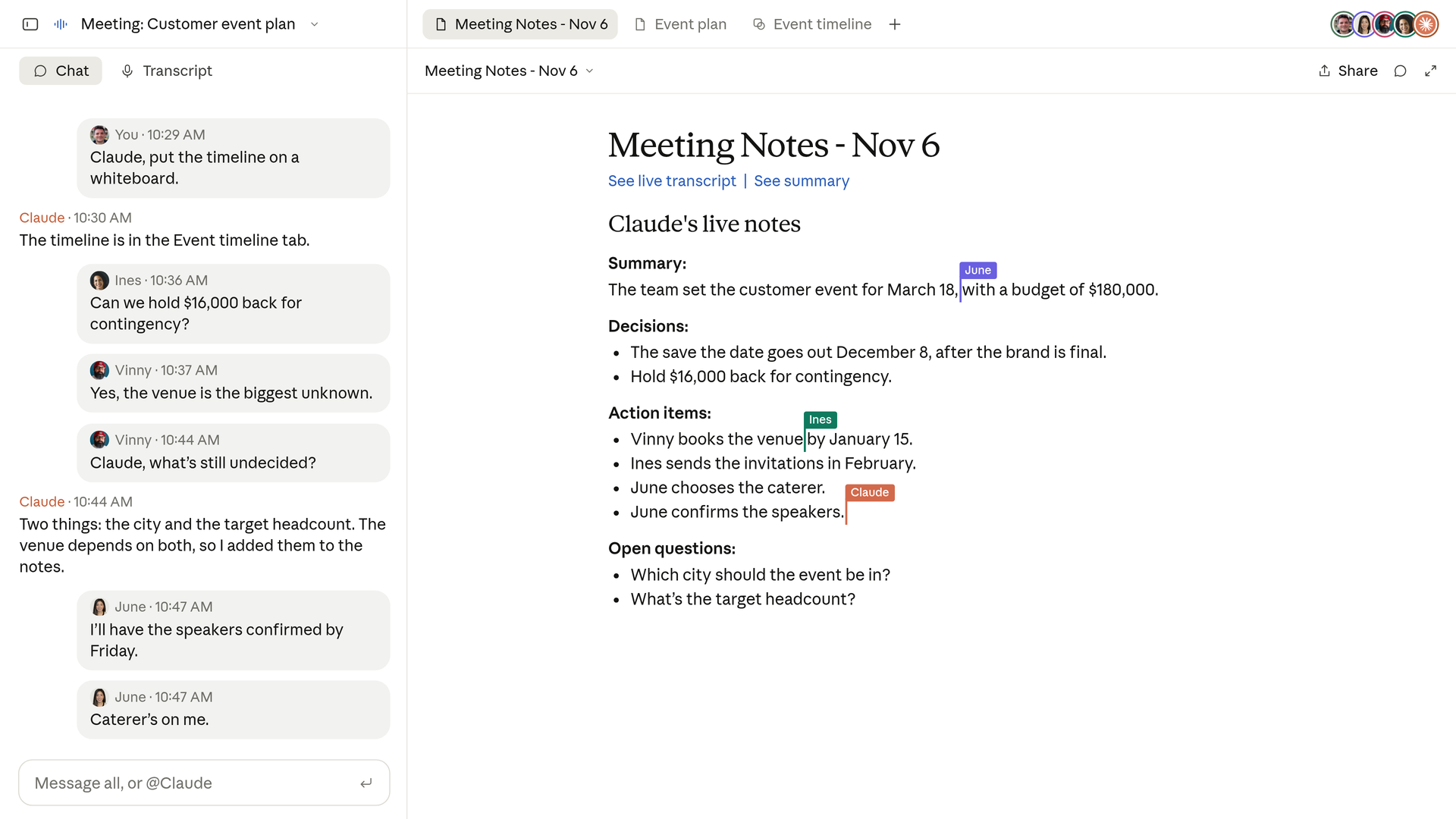
Later, you can go back to meetings you were part of and ask Claude about them, or add Claude to the next one from your calendar in claude.ai.
We’re working with partners like Gong, Attention, Granola, Fireflies.ai, and Otter so you’ll soon be able to send a meeting’s transcript to the tools your team already uses.
Security and privacy
Claude adds a separate page for each meeting in claude.ai (opens in new tab) with the notes, transcript, and anything it built. People from your organization on the invite can see it and edit what Claude made, and it can be shared with others in your organization from the page.
By default, Claude is set to stay out of calls when someone from outside your organization is invited, and to leave if someone from outside joins partway through. An admin can allow Claude on calls with outside guests. On those calls, Claude posts its notice in the call’s chat but doesn’t reply there, and what guests say is included in the notes and transcript.
Claude uses each person’s connected tools with that person’s permission. It asks the first time, and a yes applies going forward. For now, when someone asks out loud, Claude asks each time to confirm who’s speaking. An answer posted in the call’s chat is visible to everyone on the call.
When Claude joins, it appears as a participant and posts a notice in the call’s chat. It saves a transcript, summary, and screen descriptions, not audio.
Before you add Claude or turn on auto-join, make sure everyone on your calls is OK with being transcribed.
Getting started
Claude joins when someone adds it or has auto-join on. Support is currently available for Google Meet, with other platforms coming soon. On Team plans, inviting Claude to your meetings is available by default, and an admin can turn it off. On Enterprise plans, an admin turns it on for all or part of the organization. While it’s in beta, it isn’t available to some organizations, including those with zero data retention (ZDR), HIPAA-ready configuration, or customer-managed encryption keys (CMEK).
During the beta, Claude’s notes and transcripts are free on Team and Enterprise plans. So are its answers in your calls, unless an answer uses one of your connected tools, which counts toward your plan’s usage. The docs, whiteboards, (opens in new tab) and other artifacts Claude makes in a call are free through February 10, 2027.
Setup steps are in the Help Center.