How Anthropic is helping small businesses
How does a badge-maker shorten lead times but keep an old-world process alive?

Established in 1852, VH Blackinton & Co is a Massachusetts-based manufacturer that handcrafts the badges, medals, and lapel pins worn by police, fire, EMS, and corrections officers across the country. Blackinton employs about 200 people, and is moving into its third generation with the Roque family who bought it in 1974. Today, they’re using Claude to help build tools that keep their business on track without changing the craft behind their process.
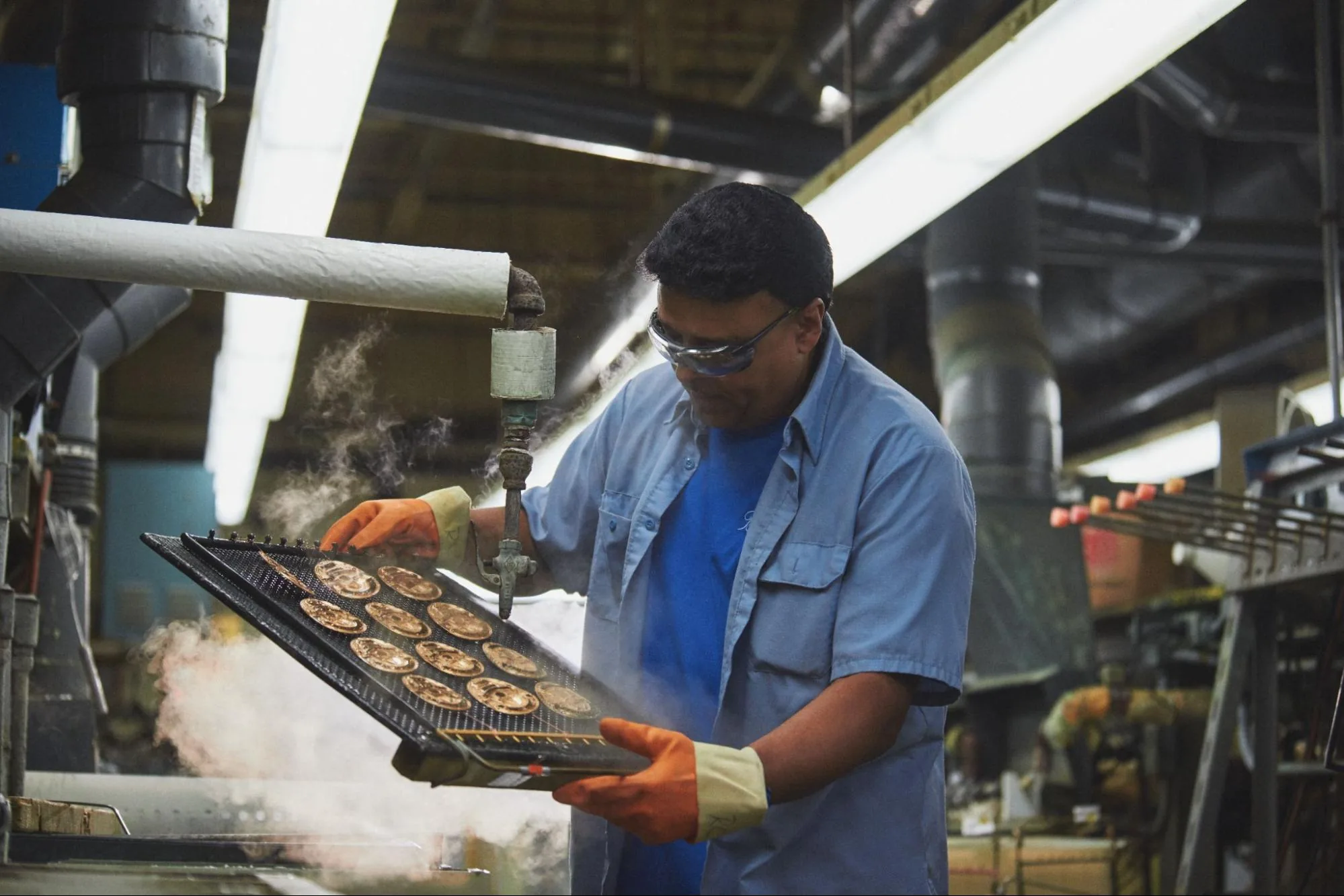
Between 8,000 and 12,000 orders sit on Blackinton’s factory floor at a given time—each one custom-made and personalized. While a responder’s pants, boots, and belts get replaced as they wear out, badges are designed to last for an entire career. They get pinned onto uniforms and worn for decades; some come back thirty years later to be embedded in acrylic as a retirement gift an officer can pass down. Blackinton also makes badges for causes the community wants to support, like the Firefighter Cancer Support Network, which helps firefighters and their families through a cancer diagnosis. “It’s very much an old-world process,” says Dave Elliott, the director of sales. “The polishing and enameling and plating, these aren’t skills that are churning out of trade schools.”
Andrew Roque, whose grandfather bought Blackinton and whose father is CEO, started at the company at 16 and now supports HR and international sales. “It’s a balancing act,” he says of modernizing a business this old. “You can check something out, you can try something…it doesn’t mean you have to let go of what you’ve been doing.”
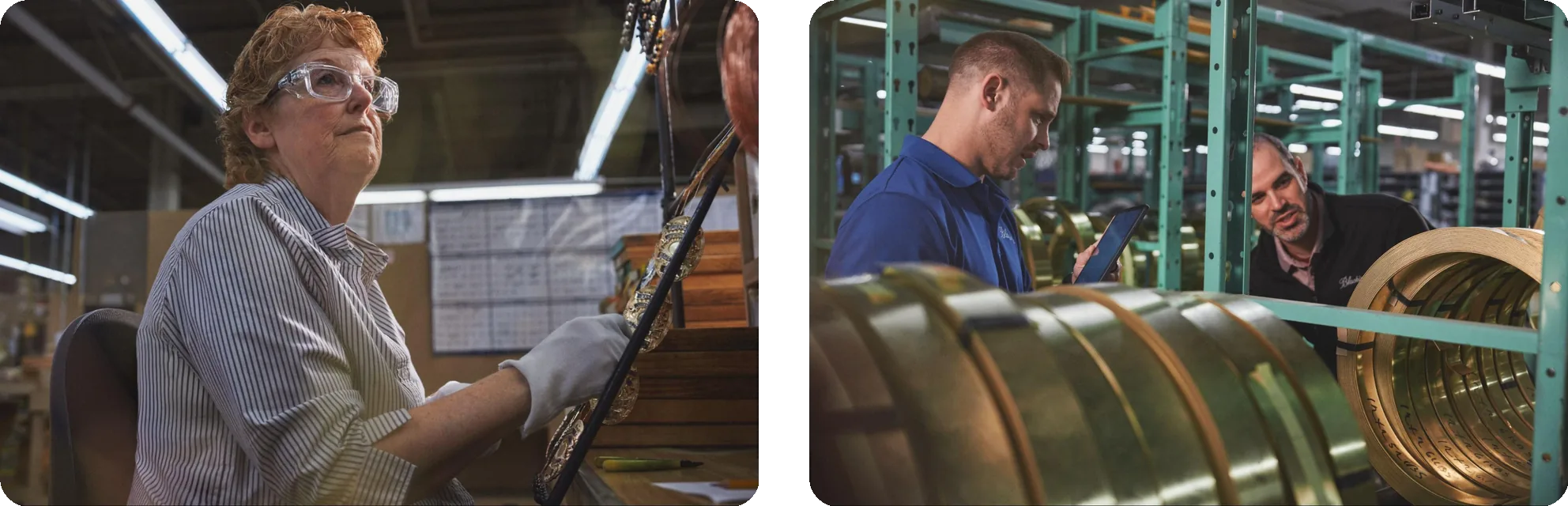
Two years ago, though, that balancing act was growing unsteady. Blackinton’s lead times had stretched to six to ten weeks—even up to fourteen in some cases. The dealer network that sells to municipal agencies had started calling the company slow: about $2.7 million in orders were stuck in production.
Part of the problem sat within the factory’s infrastructure. Blackinton’s operations run on a 40-year-old system built on Cobol, a programming language from the 1950s. It creates orders and stores records, but was never designed to explain what was happening on the floor, making it difficult for employees to access the information they needed. Around COVID, a wave of retirements compounded the problem, taking institutional knowledge with it. “We lost over 300 years of experience across these eight people that retired,” Dave says. “A long-term vision would be to have systems so that the fidelity of the information persists through time in ways that will be so much more powerful decades to come.”
Hiring Edgar Soto, a production planning manager, was a step toward that vision. Edgar came in to think about sequencing across departments, and has built new planning and reporting tools on top of the Cobol system with Claude—turning what used to depend on institutional knowledge into something the whole floor can see. Tablet-based applications are now stationed around the factory, and every morning they push a prioritization list to each department, so the whole floor is working on the right orders to achieve the same delivery dates.
In the past, tracking work as it moved inside a single department was nearly impossible. Orders only got scanned when they moved from one department to the next, so once a job landed on someone’s floor, it could sit there untracked and unprioritized. Edgar and his team built a tool for exactly that gap, which they call Stack Builder internally.
Beyond the factory-wide tools, Edgar also uses Claude to solve new problems as he comes across them. One afternoon, working with the marketing team to catalog a paper book full of design case cutouts, he stopped and asked himself why he wasn’t just building an application for that. So he did, with Claude.
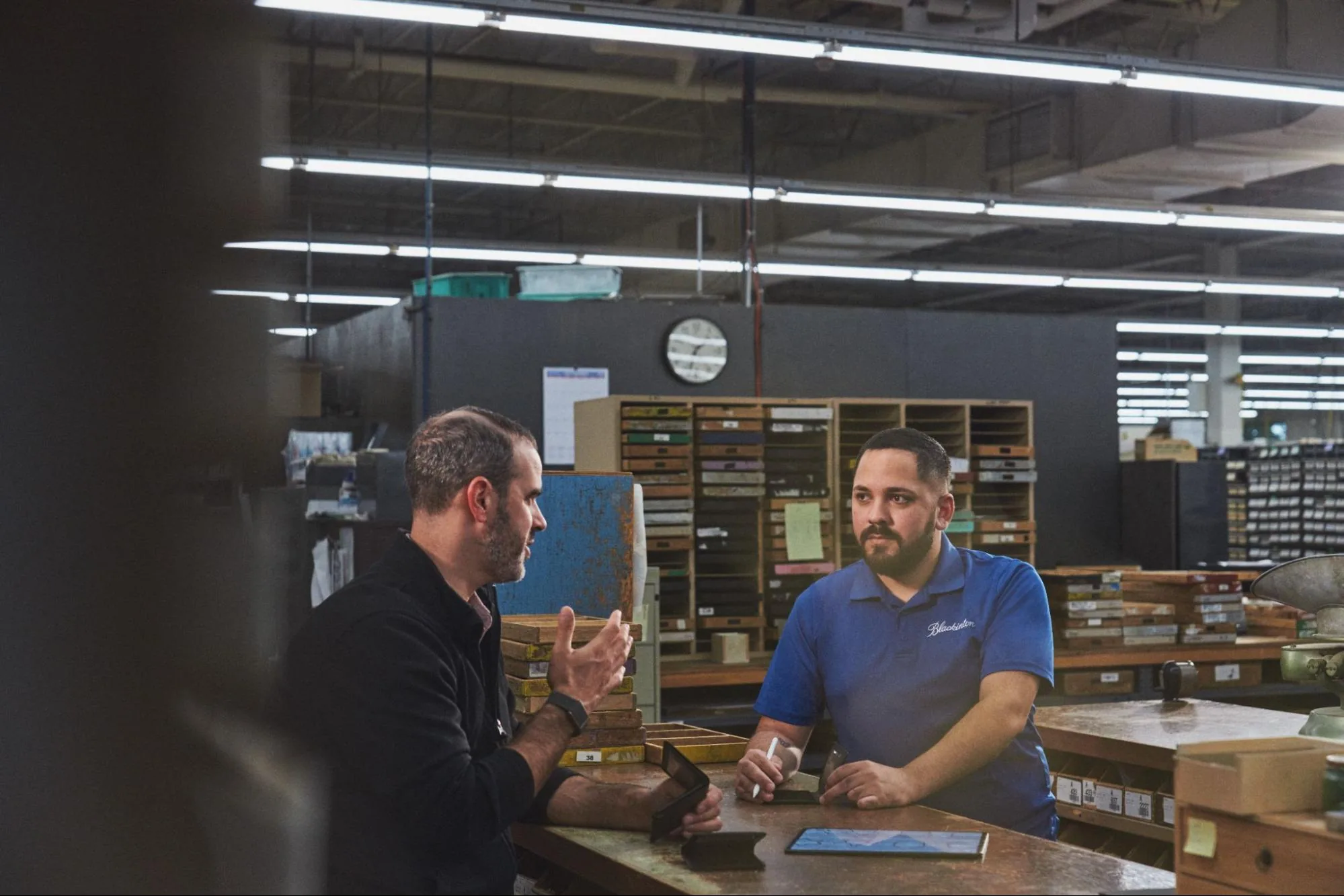
“There are hundreds of small points of friction in a place like this, you clear them one at a time, and eventually the whole thing moves.”
Blackinton recently achieved three-week lead times for its regular enamel badges and five weeks for hard enamel. The dealer relationships have grown stronger, and the sales side has moved in parallel. Dave took over the sales team in 2018 and had been thinking for years about how to give the small team modern tools. Six months ago, he and a handful of Blackinton managers decided the operation needed custom software, and despite none of them being coders or developers, they were able to build it with Claude.
The team now uses Claude to track events like department and city anniversaries that create sales opportunities, manage the roughly 200 open projects each business development manager carries, and turn data into reporting views they can put directly in front of dealers.
Of the roughly 200 people Blackinton employs, about 150 work the factory floor. Every badge is still hand-polished, hand-enameled, engraved, and lacquered. Steel dies get pressed into raw brass four or five times to bring up the detail, with a stop between presses in an oven at 1,600 degrees to soften the metal. “The people who make the badges are the most important people we have,” Dave says.
What has changed is upstream of the floor, in the sales office and in planning, where a small team is now building the kind of tools it used to have to do without.
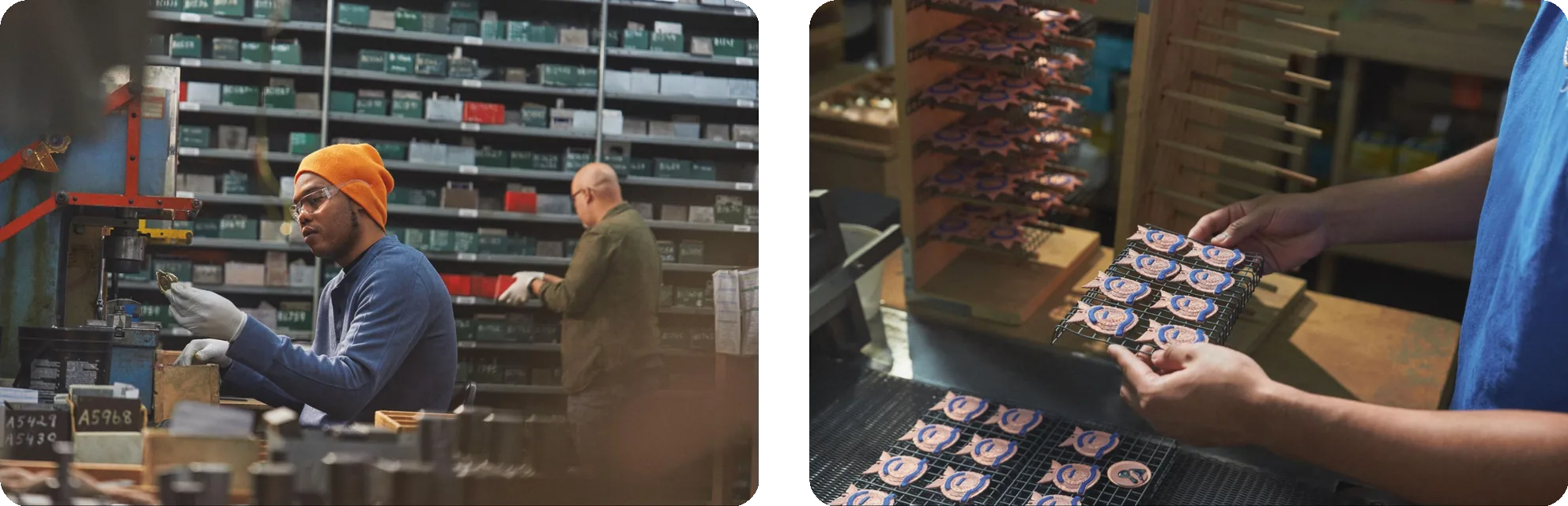
“Our goal is to make a beautiful badge, not to fill out a spreadsheet.”
The first time Andrew Roque met his wife’s grandfather, a former prison warden, the grandfather pulled out his Blackinton badge from the 1950s, hand-stenciled and still intact. “When he passed away many years after that,” Andrew says, “the badge was on his casket.”


