Bring conversations, projects, and local Cowork and Code sessions into Claude Desktop on 3P from a claude.ai workspace or an earlier install
Import brings a copy of your claude.ai conversations and projects into Claude Desktop on third-party (3P), along with any Cowork and Claude Code sessions already on this machine from an earlier install. Everything lands in the local session store described in User identity and local data, so you can pick up work you started on claude.ai and continue it against your organization’s own inference provider.Each import is a one-time copy. New activity on claude.ai after you import does not appear in Claude Desktop unless you import again, and re-running the import does not create duplicates.
Claude Desktop can automatically copy into your history the Cowork, Chat, and Code sessions it stored on this computer under an earlier third-party configuration. In an organization managed from the Enterprise Admin Console, this automatic copy is on unless it’s turned off in your organization’s settings. In any other deployment it runs only if your administrator turns it on.Along with the sessions, the automatic copy brings over other things you had under the earlier configuration:
Projects: your Cowork projects. New tasks use a project’s instructions only after you accept them.
Memory and instructions: your Cowork memory and global instructions. New tasks use them right away. Your Instructions for Claude (Settings → General) come over too. Instructions you already set under the new configuration are kept.
Scheduled tasks: your scheduled tasks from Cowork and Code. Each stays on or off as it was.
Uploaded plugins: plugins you uploaded, unless your administrator has turned off plugin uploads (userPluginUploadsEnabled). Each stays on or off as it was.
Saved skills: skills you saved, unless your administrator has turned off skill creation (skillCreationEnabled).
Your organization’s optional plugins: the ones you had turned on are turned on again, if they come from your organization’s plugins directory or from a marketplace hosted at the address of its gateway or bootstrap server. With Claude Desktop 2.42304.0 or later, plugins from other marketplaces, such as a git repository, are turned on again too, if your administrator offers the marketplace from the same repository or URL as before. On a computer where the copy already ran, they’re turned on the first time the app starts on 2.42304.0 or later.
Artifacts: your Cowork artifacts.
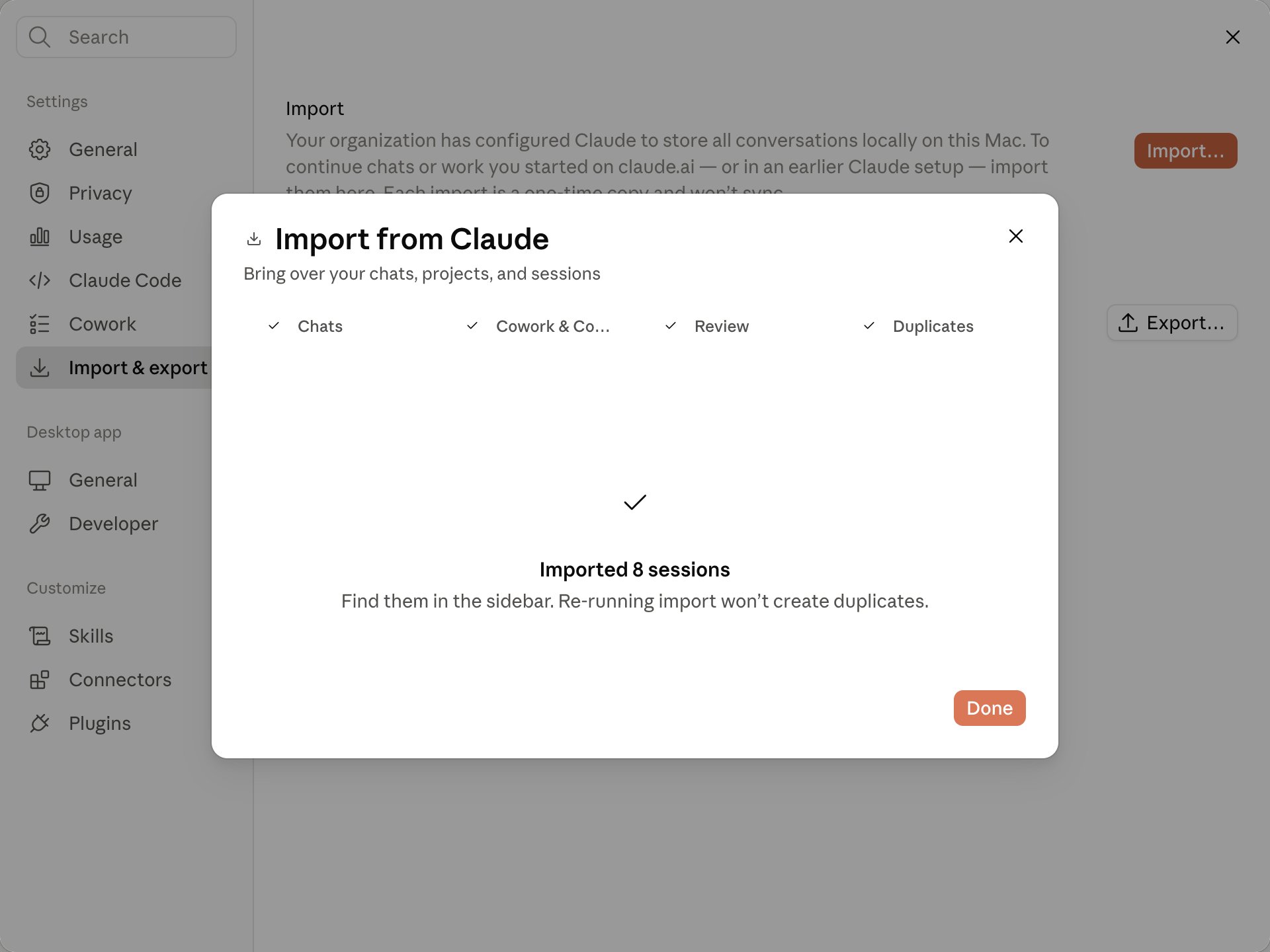
The copy runs once on each computer, in the background shortly after the app starts, and the sessions then appear in the sidebar. Your original sessions stay where they were, and sessions you already imported are skipped. The copy is listed under Import history in Settings → Import & export, where the Remove button deletes the copied sessions and the projects copied with them. The app doesn’t copy them again later.Use the import wizard for your claude.ai conversations and projects, and for any local sessions the automatic copy left out.
Your administrator has turned import on by setting claudeAiImport with enabled set to true in the managed configuration. The import wizard is off by default; until then, Settings → Import & export has no Import… button and reports that import isn’t enabled for this deployment. The automatic import of earlier third-party sessions doesn’t depend on this setting.
If your administrator lists the claude.ai organizations you may import from, with allowedOrganizationUuids under claudeAiImport, you can import only by signing in to claude.ai, and only from a listed organization. A sign-in to any other organization or to a personal account is refused, and the wizard’s options to import from a file or from earlier sessions on this computer are turned off. The automatic import of earlier third-party sessions isn’t affected by this list.
Claude Desktop is installed and running in third-party mode. See Installation and setup.
To bring history over from a claude.ai Team or Enterprise workspace, an owner of that workspace has enabled member data export (next section). Personal claude.ai accounts can always export.
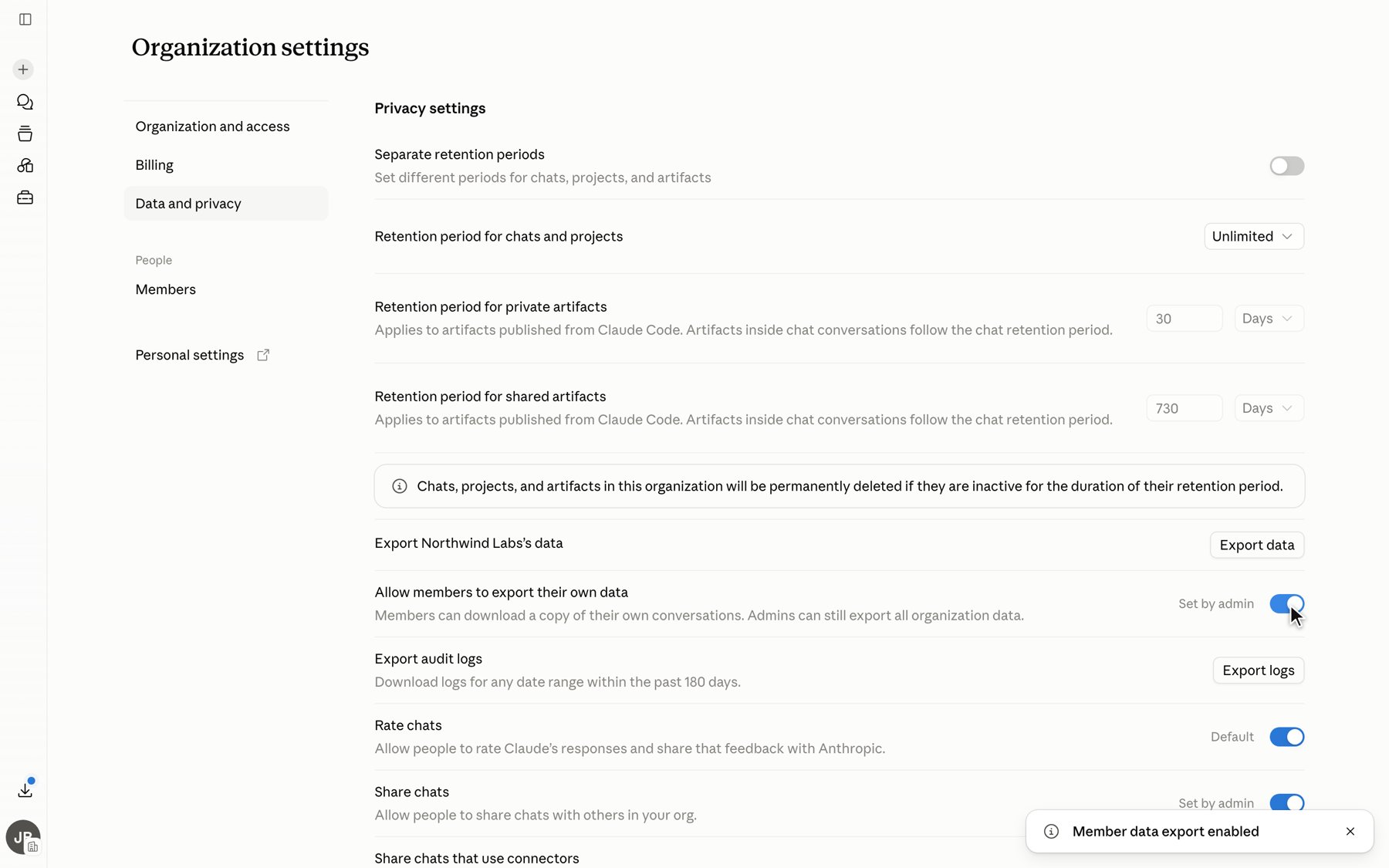
On Team and Enterprise workspaces, member data export is off by default. A workspace owner enables it on claude.ai under Settings → Organization → Data and privacy → Allow members to export their own data.
The member data export toggle in claude.ai organization settings. Only workspace owners see this control.
Members of the workspace can then export their own conversations. The toggle does not expose one member’s data to another; each member can download only their own history.
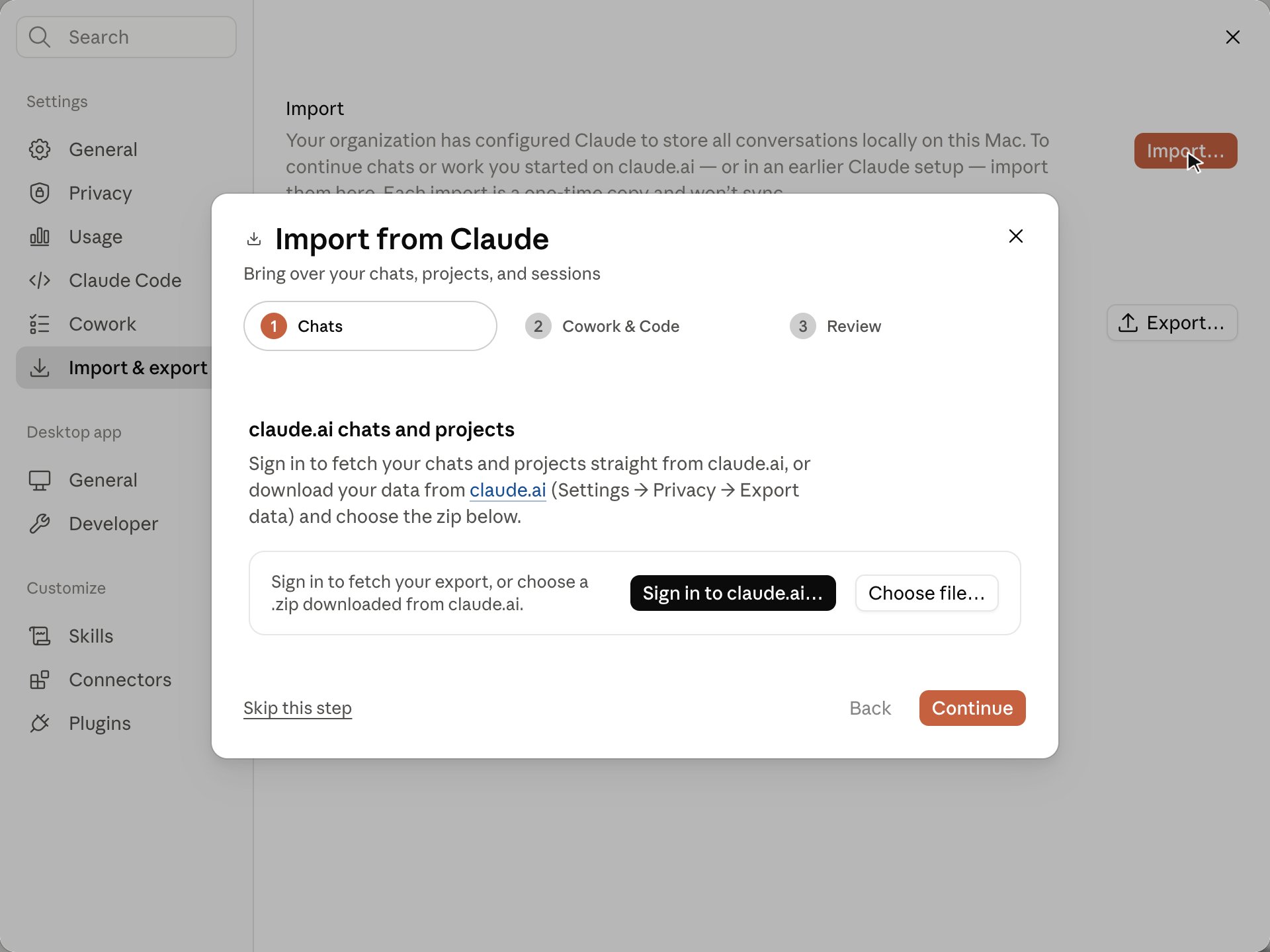
In Claude Desktop, go to Settings → Import & export and click Import… to open the Import from Claude wizard.
Step 1 of the import wizard, before a source is chosen.
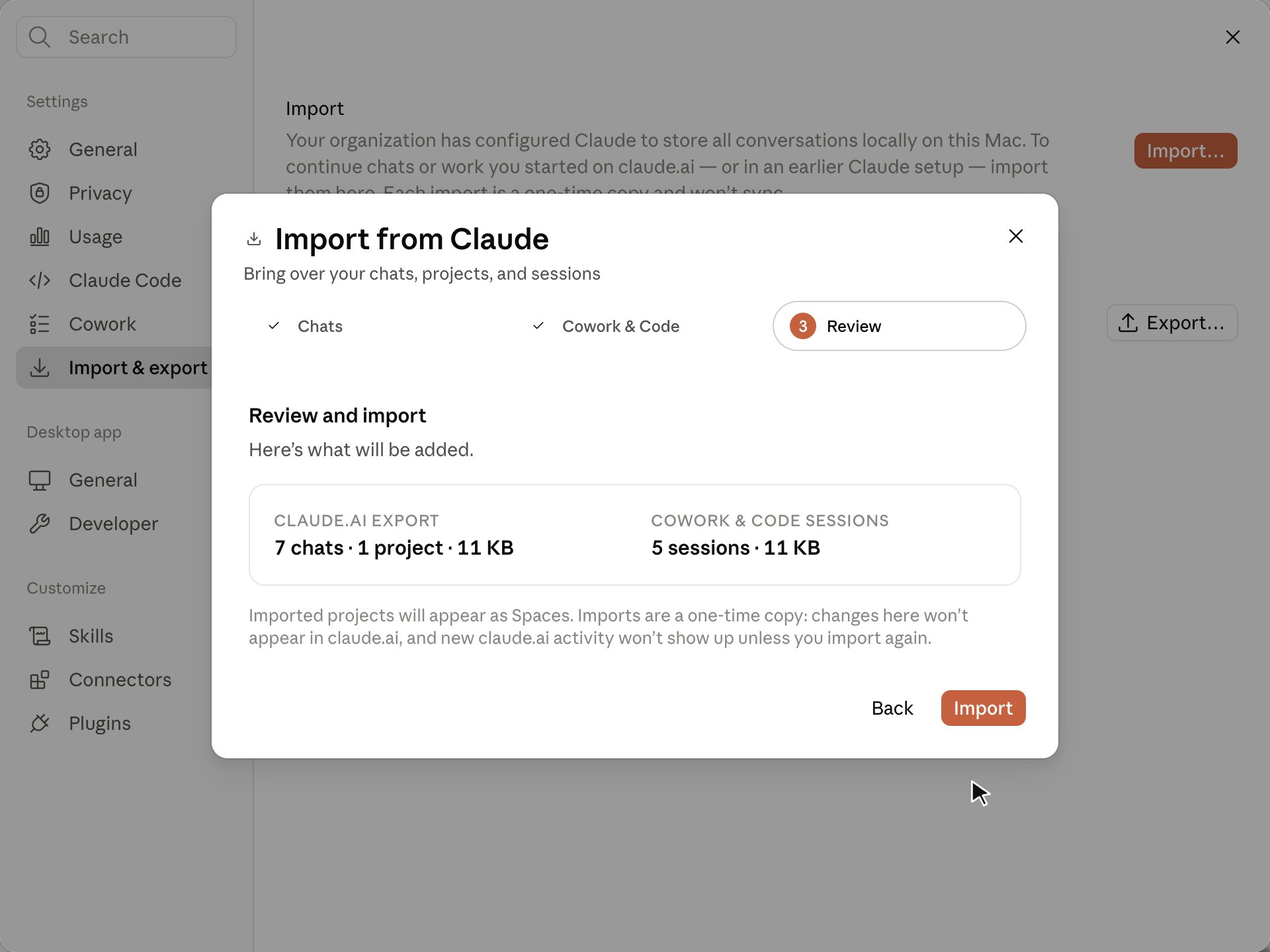
The wizard has three steps: Chats (your claude.ai export), Cowork & Code (local sessions on this machine), and Review. Skip any step you don’t need. A fourth step, Duplicates, appears after the import only when an imported project has the same name as one you already have. See If a project already exists.
You can pull your claude.ai history straight into the wizard by signing in, or download it from claude.ai yourself and choose the file.
Sign in to claude.ai (recommended)
Choose a downloaded file
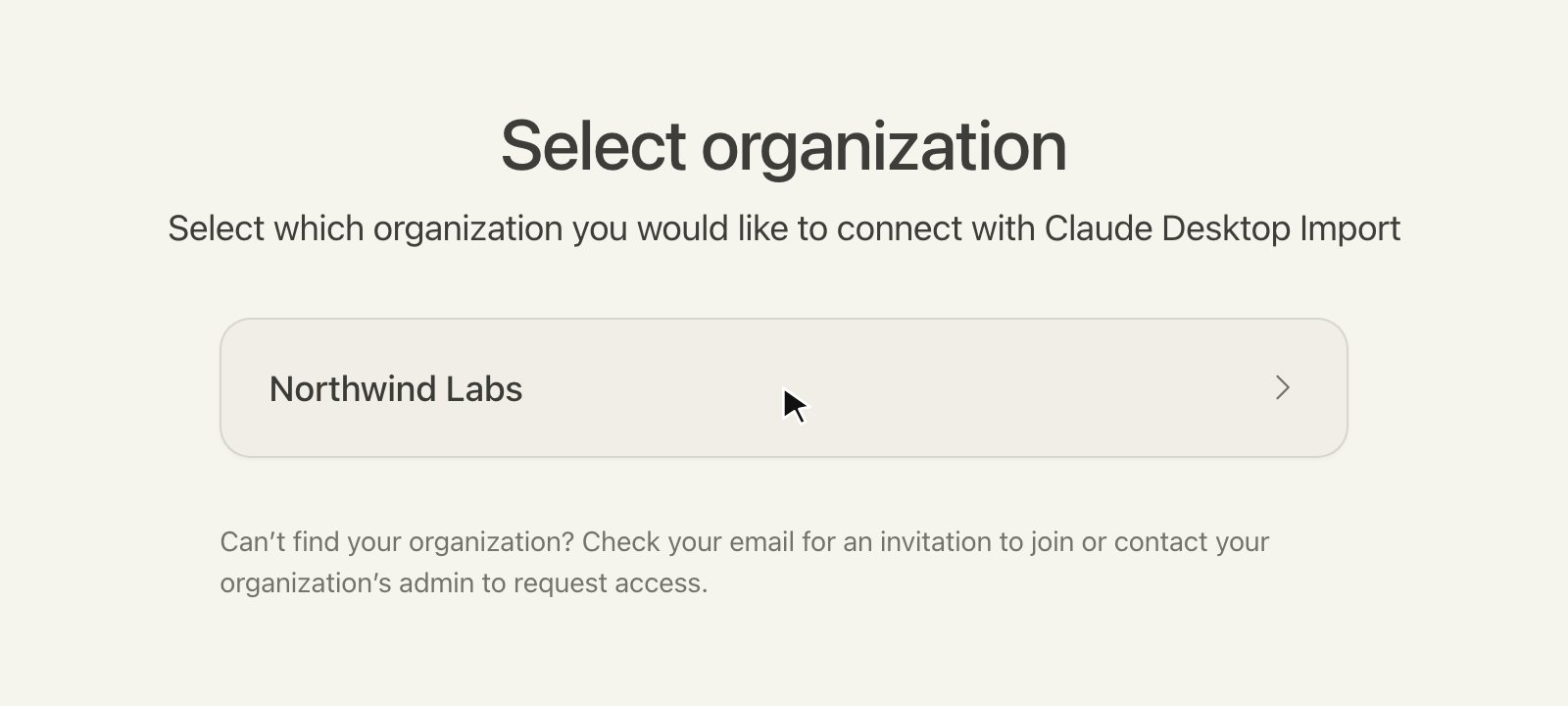
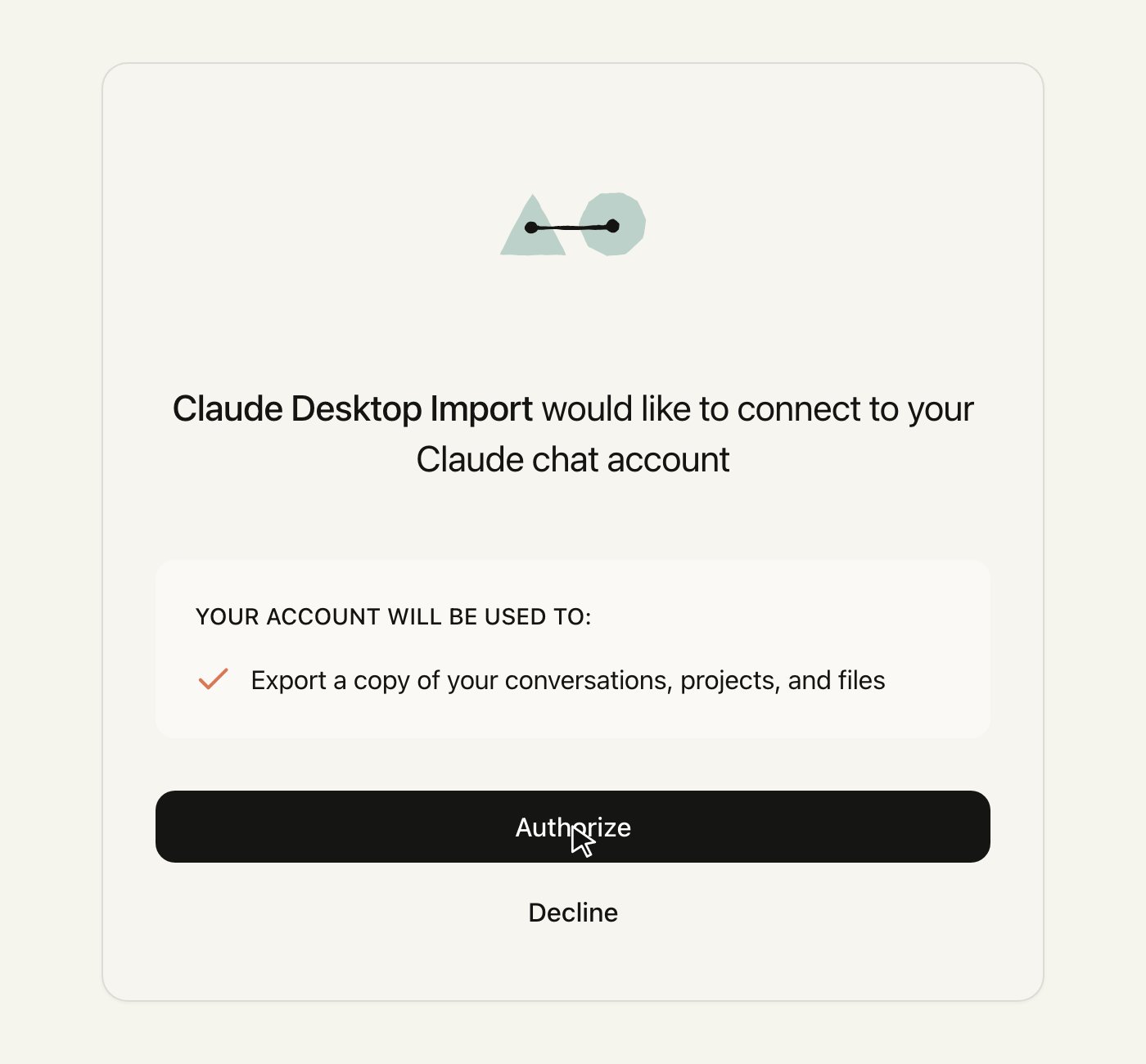
Click Sign in to claude.ai…. Your browser opens to claude.ai; sign in if prompted, choose your organization if you belong to more than one, and click Authorize.
The organization selector, shown if your claude.ai account belongs to more than one workspace.
The authorization prompt. The only permission granted is a one-time export of your own data.
Back in Claude Desktop, click Fetch export. The wizard requests an export from claude.ai, downloads it, and shows what it found.
The wizard after the export finishes downloading.
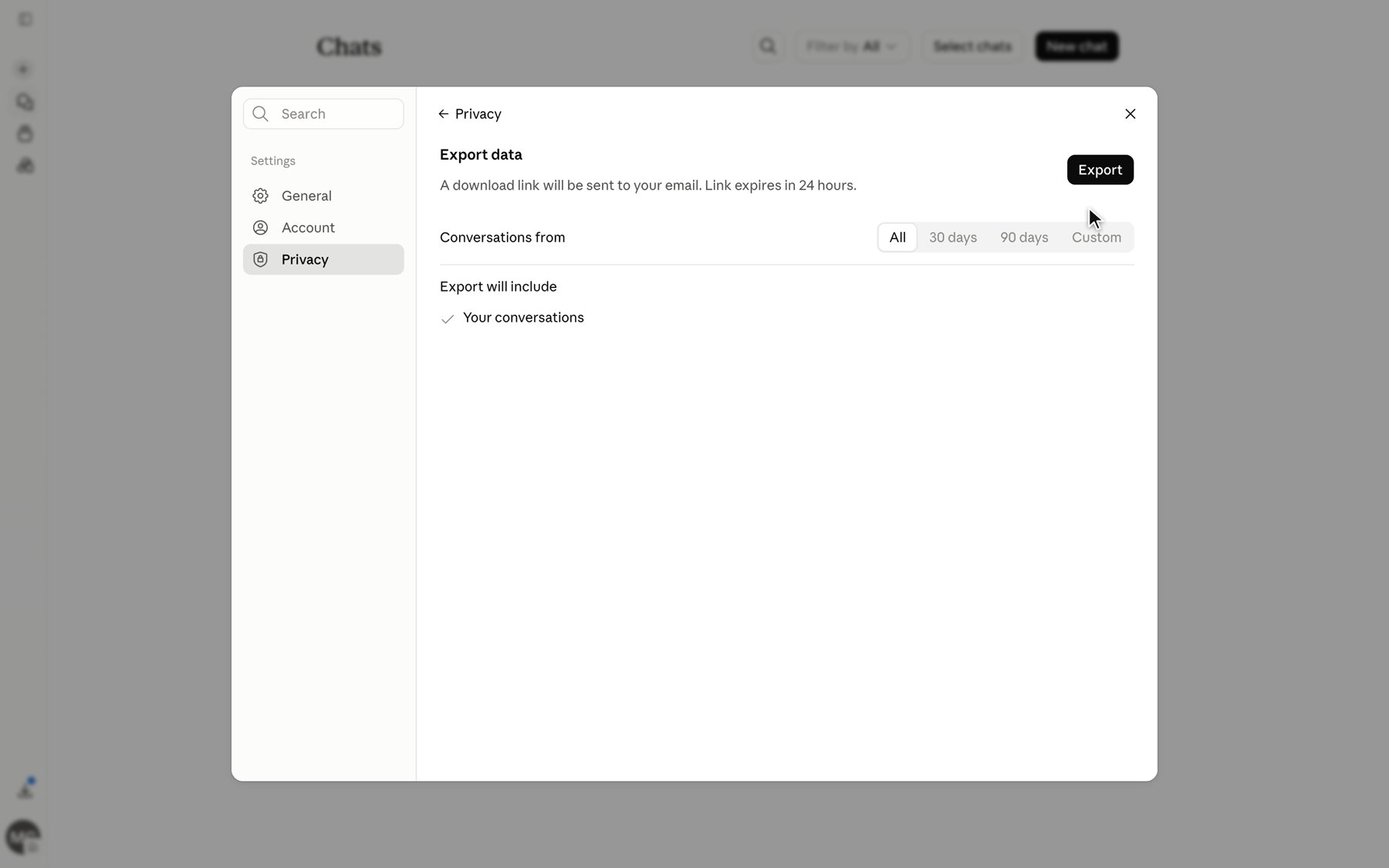
On claude.ai, go to Settings → Privacy → Export data and click Export. If you don’t see Export data, ask a workspace owner to enable member data export.
The Export data page in claude.ai personal settings.
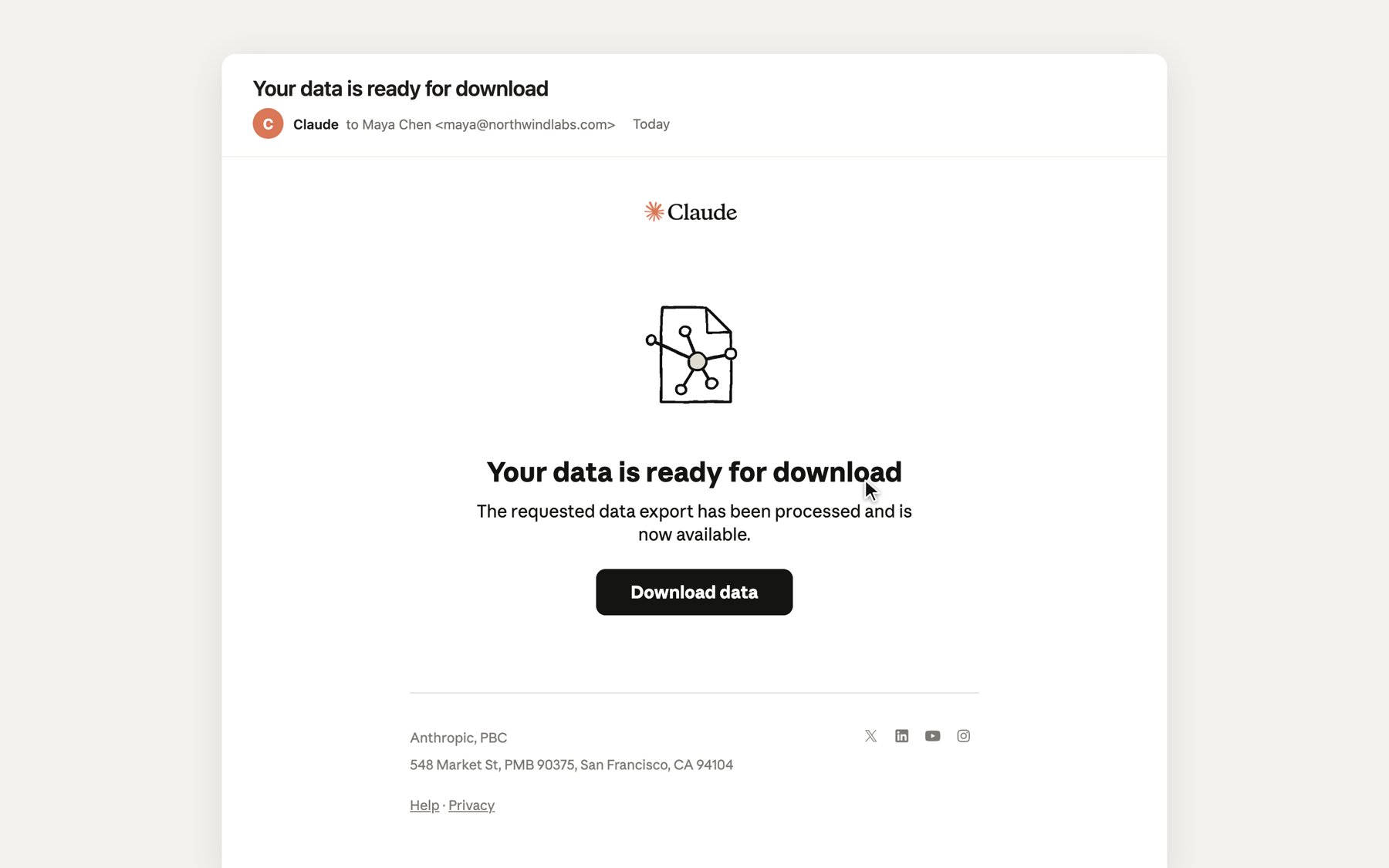
claude.ai emails you a download link when the export is ready. The link expires after 24 hours.
The export-ready email.
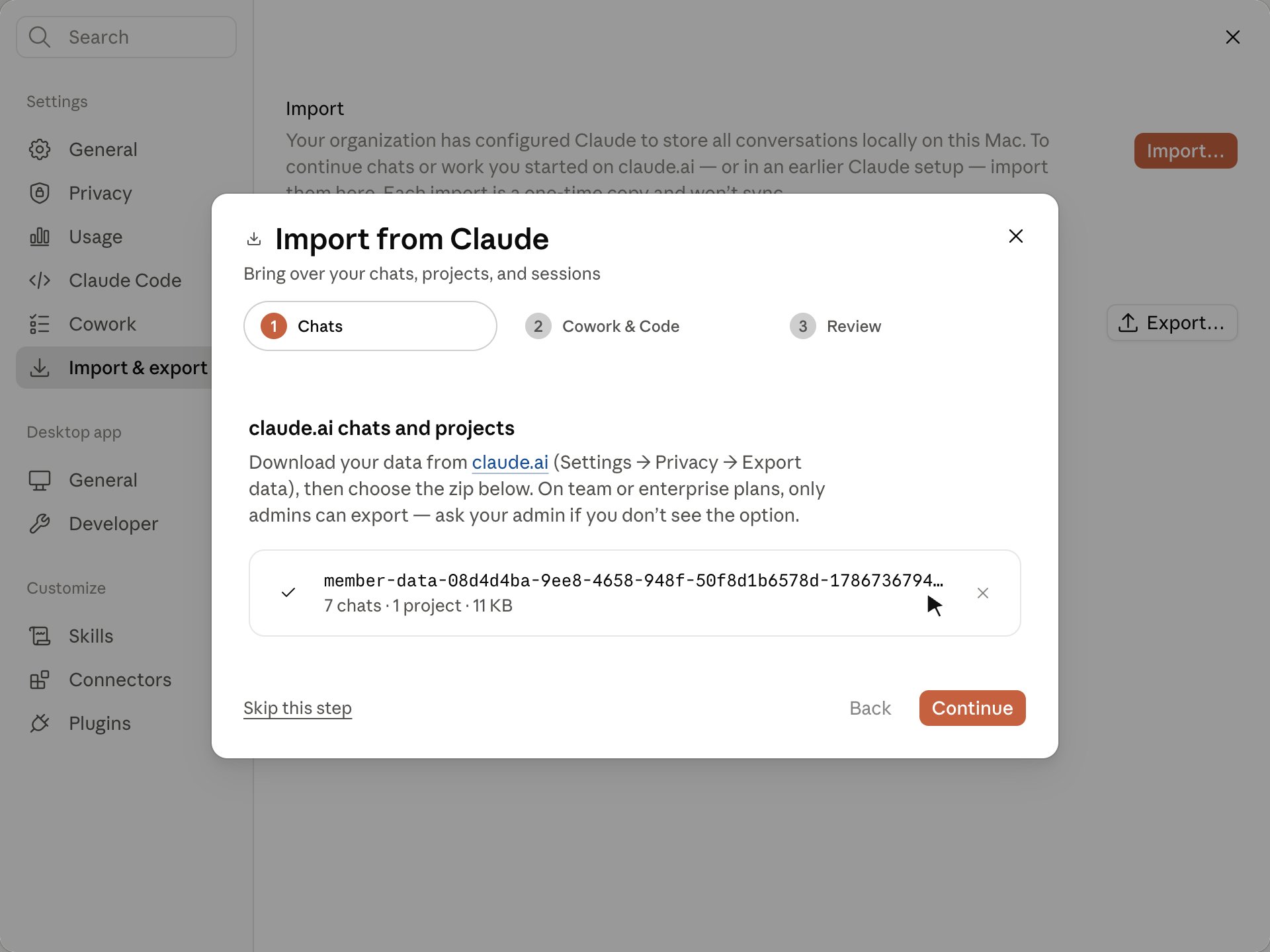
Download the .zip, then in the import wizard click Choose file… and select it.
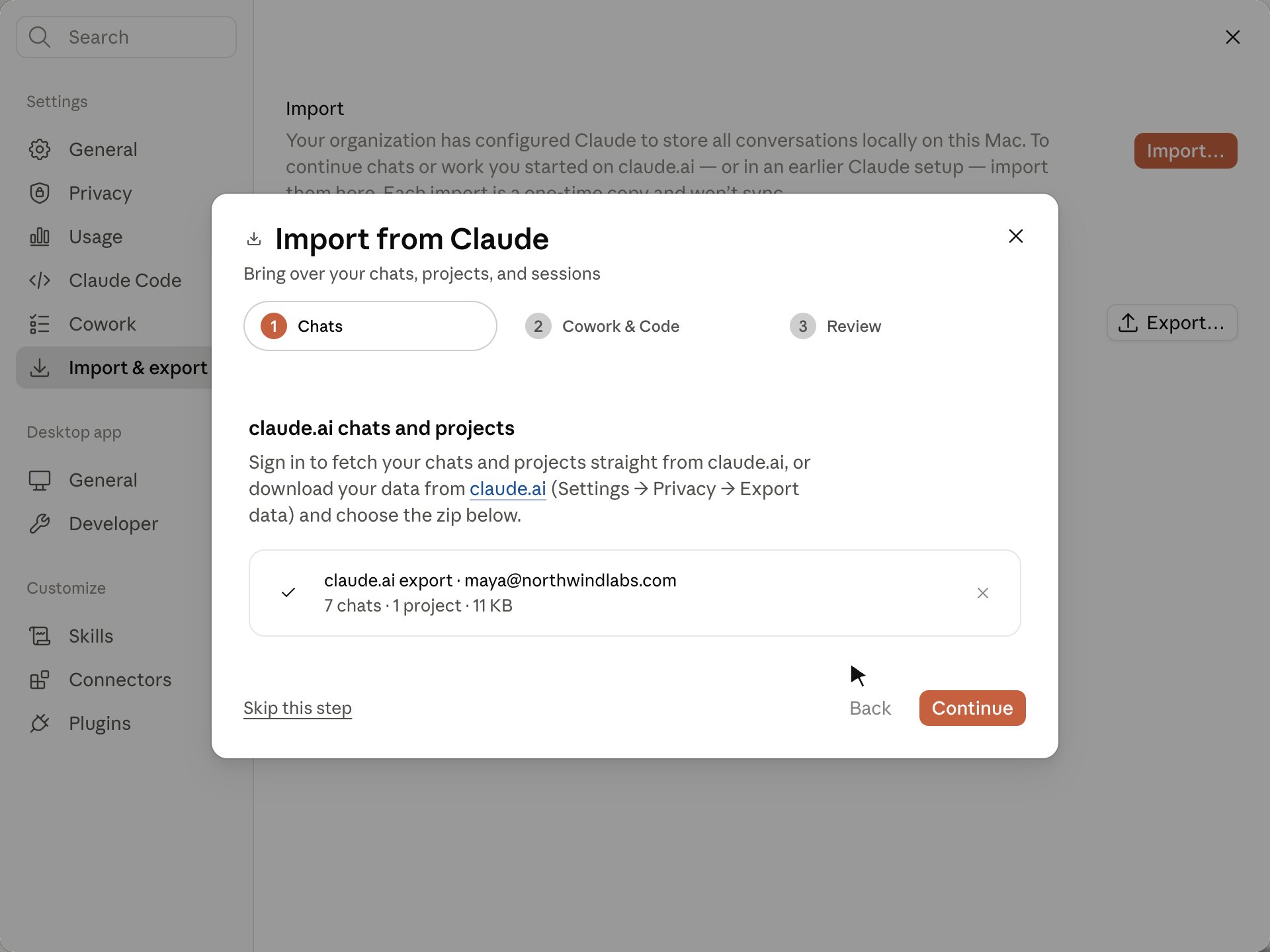
Step 1 with a downloaded export selected.
Click Continue, or Skip this step if you only want to bring in local sessions.
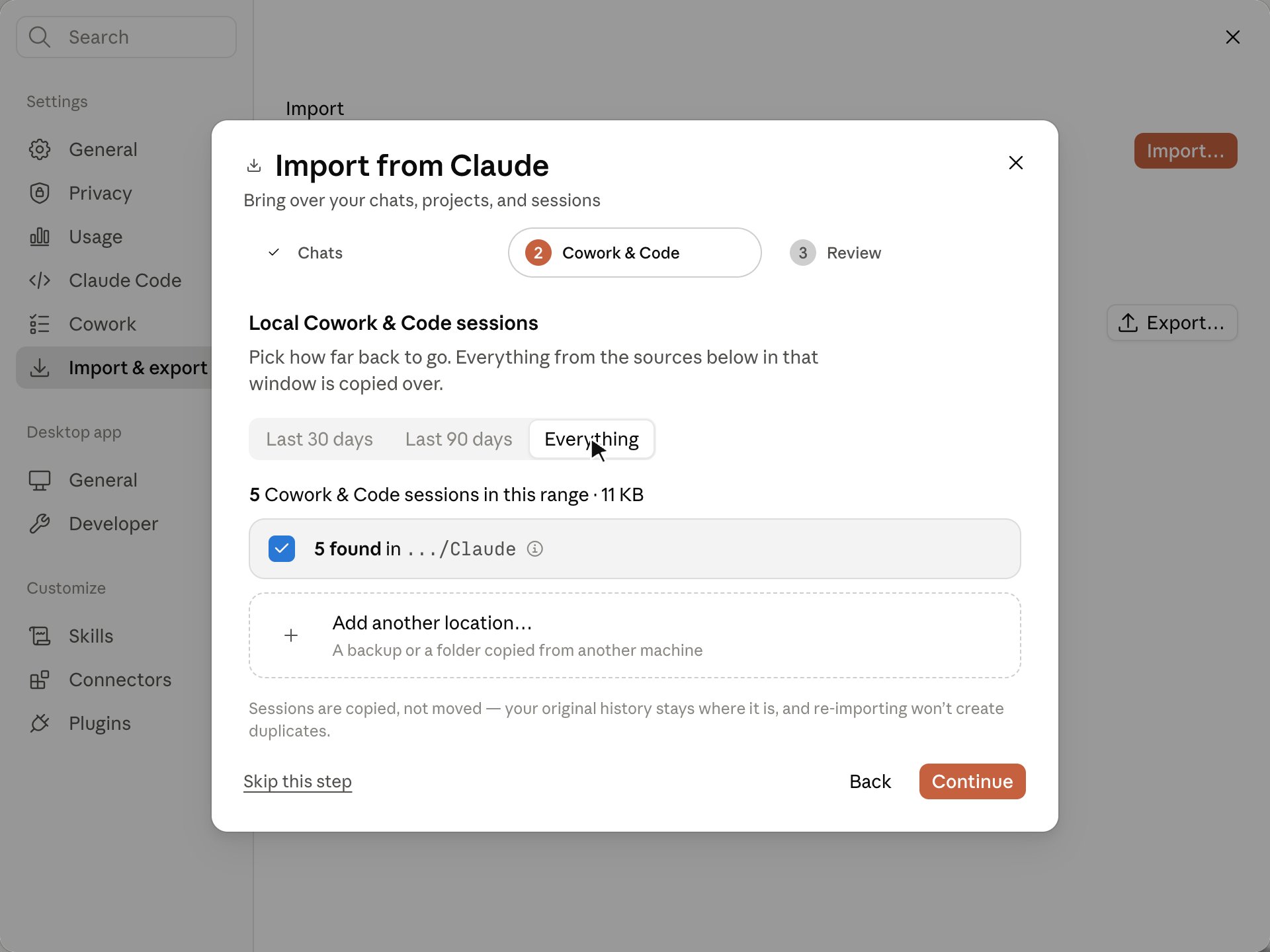
The wizard scans this machine for Cowork and Claude Code sessions from an earlier Claude Desktop install and lists what it finds. Choose how far back to include, and add any other folder that holds sessions (for example, a backup or a folder copied from another machine).
Local sessions found on this machine.
Sessions are copied, not moved. Your original history stays where it is.
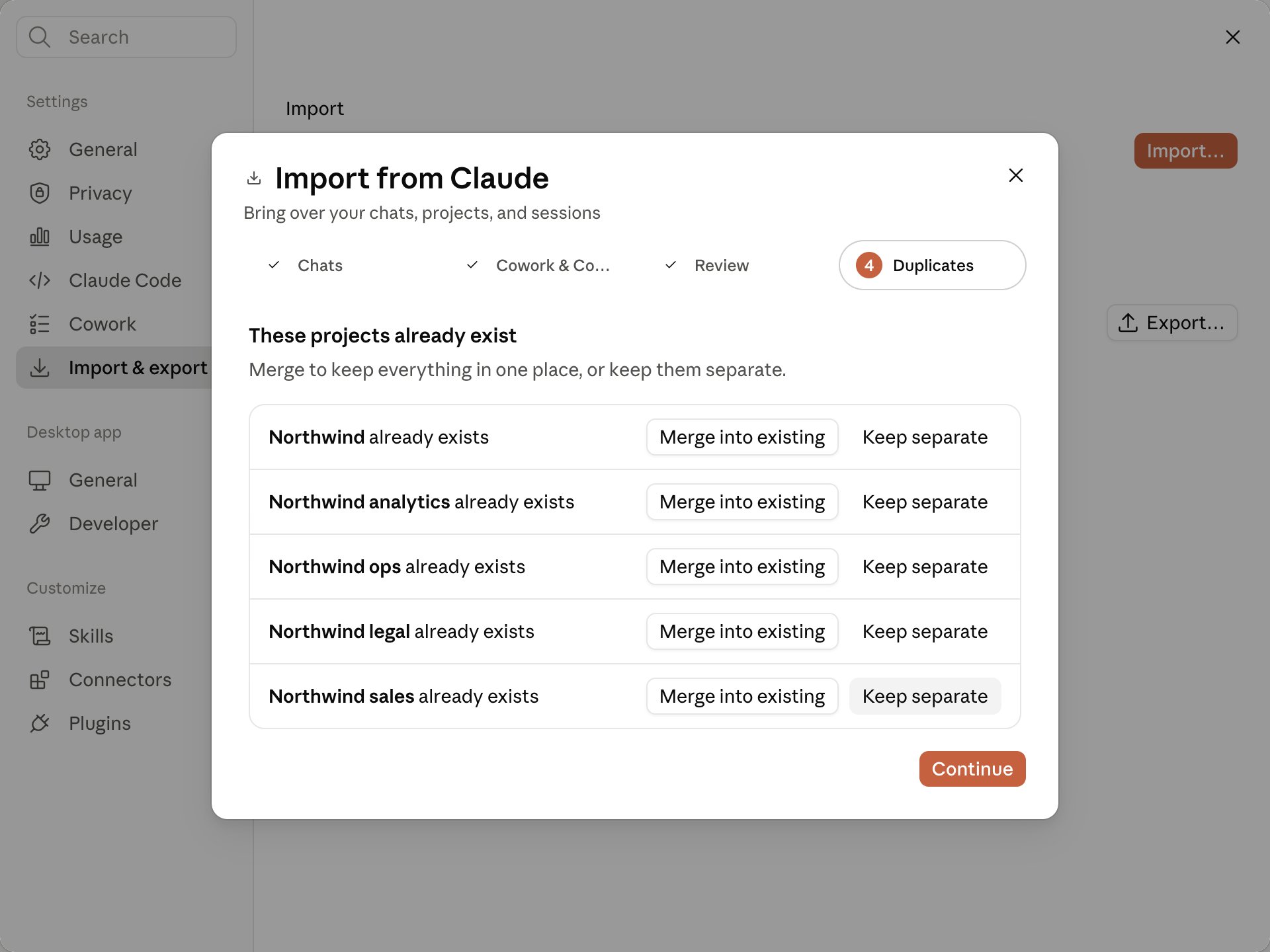
When an imported project has the same name as a project already in Claude Desktop, the wizard adds a Duplicates step after the import finishes. This happens, for example, when you set up Northwind on this machine and then bring over history from another machine that also has a Northwind project. The step lists each match with two choices.
The Duplicates step, listing imported projects that match ones you already have.
Merge into existing moves the imported chats and sessions into your existing project and removes the duplicate. Folders you attached to the duplicate move with them. If your existing project has no instructions of its own, the imported project’s instructions are shown there for you to review and accept. Later imports from the same source land in the existing project as well.
Keep separate leaves both projects in place. The imported one keeps a numbered name, such as Northwind (1), and Claude Desktop stops offering to merge it.
The Projects page offers the same two choices, in a row under the duplicate project’s card and at the top of the duplicate project’s own page. Decide there if your history was brought over automatically when you signed in, so you never saw the wizard, or if you closed the wizard before choosing.
Open any imported conversation from the sidebar and keep chatting. The first time you send a message in an imported session, Claude Desktop asks you to confirm before it continues. The reply then comes from your configured inference provider, not from claude.ai.
A session from this app’s earlier third-party configuration on this computer shows a Continue this conversation? prompt. Click Continue to send your message.
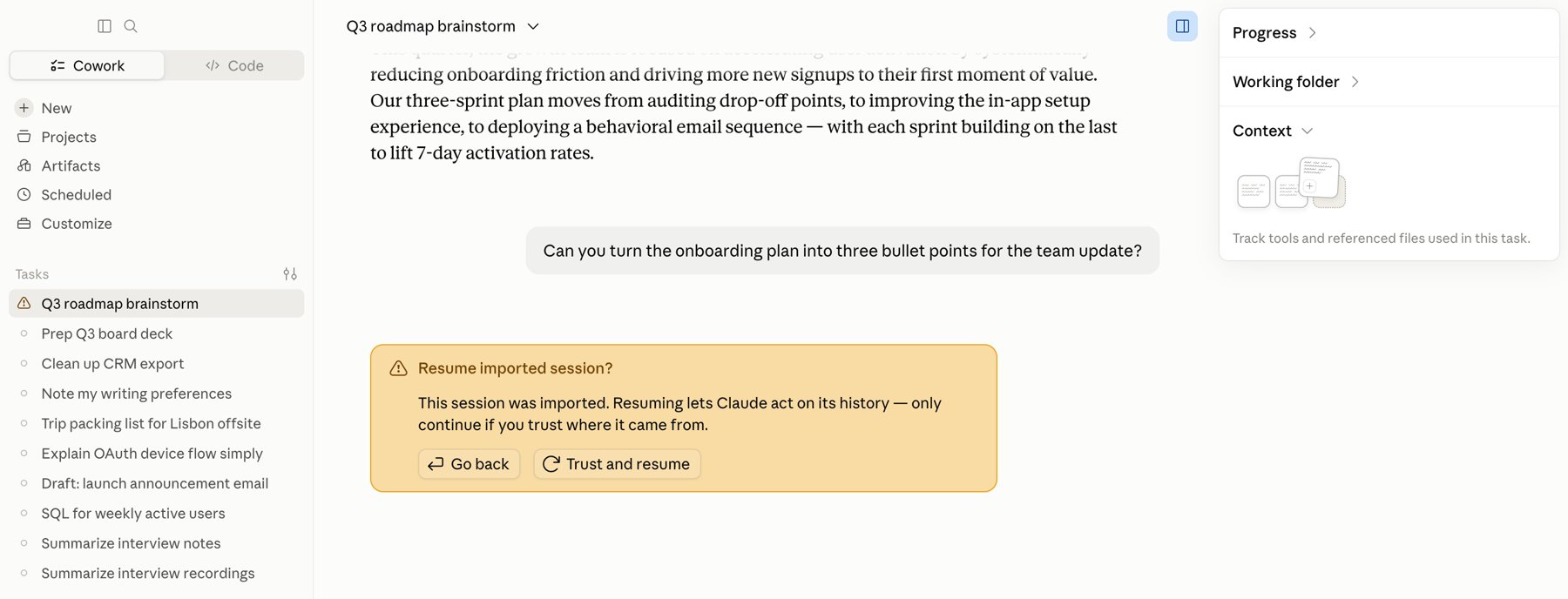
Any other imported conversation or session shows a Resume imported session? prompt. Click Trust and resume to continue.
The trust prompt shown the first time you resume a conversation imported from claude.ai.
When your administrator also sets exportEnabled to true under claudeAiImport, Settings → Import & export offers Export…, which writes this computer’s chats, Cowork tasks, and Code sessions (not terminal Claude Code sessions) to a zip file. On the other device, open the import wizard and select that zip with Choose file…; the wizard lists its sessions in the Cowork & Code step. The export is a one-time snapshot, not a sync, and the zip contains full conversation content, so handle it as sensitive data.The zip includes sessions, project names, and each session’s output files when they total 100 MB or less. It leaves out project instructions, memory, scheduled tasks, skills, plugins, and attached files. To move those, your administrator can copy your data to the new device. Sign-ins and connector connections don’t move either way.
Your data only. An export contains your own conversations, projects, and memory. Other workspace members’ content is not included.
Chats and projects come over. Each imported project appears on the Projects page. If the project has custom instructions, Claude Desktop shows them in the project for you to review and accept before they take effect. In Chat, Claude can’t read a folder that the import put on a project until you add the folder to the project again and start a new conversation. See Project folders in Chat.
Artifacts come over as files. For artifacts Claude created in a conversation, and files Claude wrote with its file-creation tool, the import saves the final version as one of the imported conversation’s output files. Earlier versions aren’t kept. Past a size limit, the rest of a conversation’s artifact content isn’t imported, and the conversation says so.
Project knowledge files and conversation attachments do not. A member’s own export never includes the contents of files uploaded to a project’s knowledge or attached to a conversation. This is a security policy on claude.ai, and it applies to both the Sign in to claude.ai and Choose a downloaded file paths. Imported chats keep the messages that referenced an attachment, but not the file itself. The only export that includes file contents is an organization-level export, which only a workspace owner can request.
One-time copy. Imported history does not stay in sync with claude.ai. Run the import again to pick up newer conversations; existing imports are matched and skipped, so you won’t get duplicates.
Download links expire. The email link from claude.ai is valid for 24 hours. Request a new export if it lapses.
Was this page helpful?
Assistant
Responses are generated using AI and may contain mistakes.